The realism of an LED dancing candle comes down almost entirely to its flame simulation technology, not its outer wax shell or decorative finish. A candle using a moving-wick or 3D flame mechanism creates genuinely irregular, multi-directional movement that mimics real fire, while basic randomized-blink models only vary brightness without any physical motion — a difference immediately obvious side by side. Choosing well means prioritizing the internal flicker mechanism first, then evaluating power source and build quality as secondary factors.
Flicker Technology Comparison: What Actually Creates Realistic Movement
Not all "flickering" LED candles use the same underlying mechanism, and the technology behind the flicker is the single biggest factor separating a convincing flame effect from an obviously artificial one.
| Flicker Type |
Movement Mechanism |
Realism Level |
| Static Blink LED |
Simple brightness variation, no physical motion |
Low |
| Randomized Program Flicker |
Microchip-driven irregular brightness patterns |
Moderate |
| Moving-Wick / 3D Flame |
Physical wick component moves via magnetic or mechanical action, creating actual multi-directional motion |
High |
Static blink models simply cycle an LED between brightness levels on a fixed or semi-random timer, producing a flat, repetitive effect that becomes noticeable within a minute or two of watching. Randomized program flicker improves on this by using a small microchip to vary brightness, timing, and intensity unpredictably, which reads as more natural from a distance but still lacks true physical movement. Moving-wick designs, where a small fabric or plastic "wick" element is suspended and moved by a tiny magnet or mechanical actuator beneath the flame housing, create genuine three-dimensional motion that shifts direction the way a real flame responds to air currents — this is consistently the most convincing category in side-by-side comparisons.
Power Source Options and Their Practical Trade-Offs
How an LED dancing candle is powered affects everything from placement flexibility to long-term running cost, and the right choice depends heavily on intended use frequency and location.
- Replaceable battery models (AA/AAA): Offer the most placement flexibility since no outlet is needed, but typically require battery changes every 200–400 hours of use depending on brightness setting and flicker complexity.
- Built-in rechargeable battery models: Avoid ongoing battery replacement cost and reduce waste, though they add bulk to the candle base and eventually lose charge capacity after several hundred charge cycles, similar to any rechargeable battery product.
- USB or plug-in powered models: Best suited for permanent installations like window displays or mantel decor where continuous use is expected, since they eliminate battery concerns entirely but tie the candle to a fixed location near a power source.
For seasonal or event use — such as wedding centerpieces or holiday displays used a few times a year — replaceable battery models generally offer the best balance of convenience and cost, since infrequent use means battery life rarely becomes a practical concern. For daily ambient lighting left running for hours each evening, rechargeable or plug-in models avoid the recurring cost and inconvenience of frequent battery swaps.
Wax Shell Material and Its Effect on Light Diffusion
The outer material surrounding the LED and flicker mechanism significantly influences how light appears from outside the candle, not just how it looks when unlit.
| Shell Material |
Light Diffusion Quality |
| Hard Plastic (ABS/PVC) |
Lower — often shows a visible point-source glow rather than soft ambient light |
| Real Wax Coating Over Plastic Core |
Higher — wax translucency softens and spreads light more evenly across the surface |
| Frosted or Textured Resin |
Moderate to high — depends on wall thickness and texture depth |
Real wax-coated shells consistently outperform hard plastic shells for light quality because wax has natural translucency that diffuses the internal LED glow rather than allowing it to shine through as a single bright point. This is a detail easy to overlook when comparing candles by photos alone, since a lit hard-plastic candle can look similar to a wax-coated one in a still image but shows a noticeably harsher, more artificial glow in person, especially in dim rooms where the light source itself becomes more visible.
Timer Functions and Their Practical Value
Automated timer functions are one of the most genuinely useful additions to an LED dancing candle, since they solve the recurring hassle of manually turning candles on and off, particularly for holiday displays or multi-candle arrangements.
- Most timer-equipped candles offer a repeating cycle, commonly 6 hours on and 18 hours off, which automatically restarts at the same time daily without needing to be reset each day.
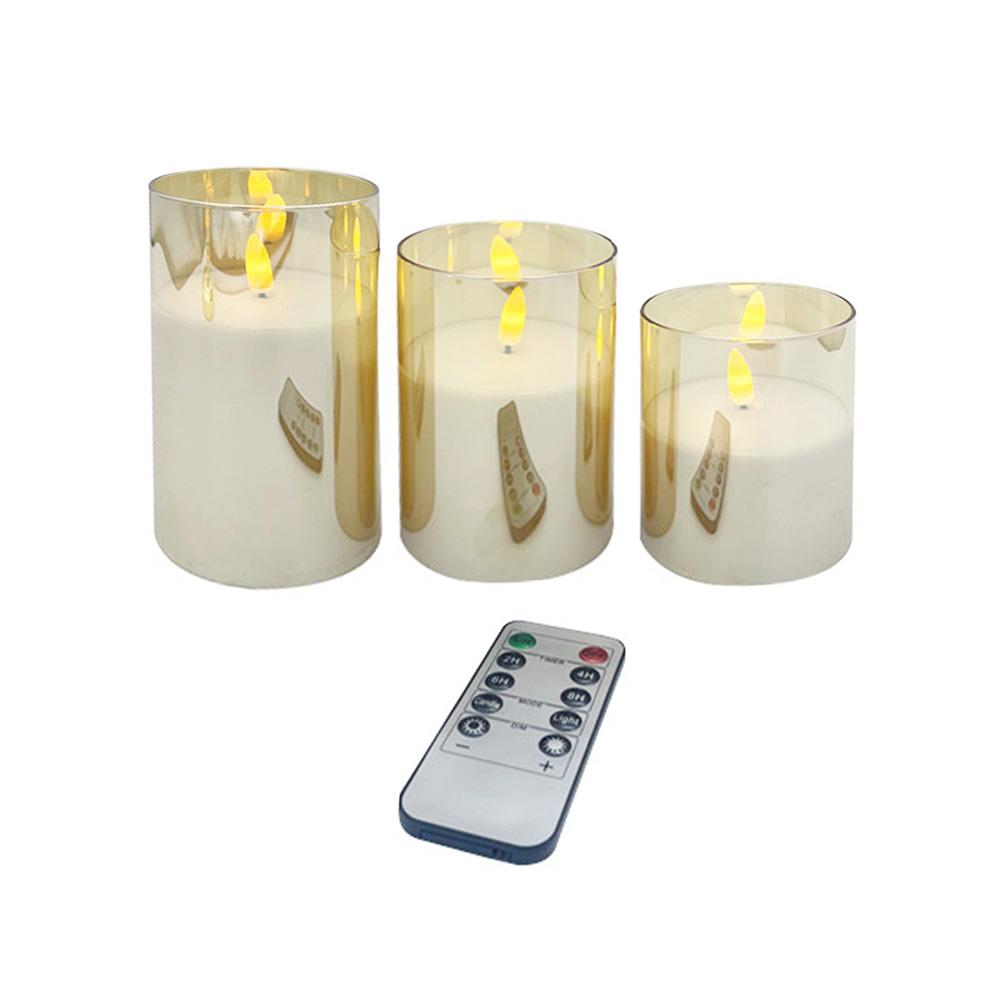
- Some models allow custom on/off scheduling through a small remote or button interface, useful for matching specific event timing rather than a fixed daily cycle.
- Non-timer models require manual switching every use, which becomes impractical when managing a dozen or more candles across a large display or event space.
For anyone setting up multiple candles in a window display or along a mantel, a built-in daily timer removes the need to individually switch each unit on and off every evening, a small feature that saves meaningful time over weeks of seasonal use.
Remote Control Range and Group Synchronization
For displays involving multiple candles, remote control capability and how well units synchronize with each other becomes an important practical consideration that single-candle comparisons often miss.
Basic infrared remotes typically require a direct line of sight and a range of roughly 3–5 meters, which works fine for a small tabletop grouping but becomes limiting for candles spread across a larger room or multiple shelves. Radio frequency (RF) remotes don't require line of sight and generally offer a longer range, often 10 meters or more, making them better suited for controlling groups of candles placed in different areas of a room simultaneously. Some higher-end designs allow a single remote to control multiple candles in sync, turning an entire grouping on, off, or between brightness settings together — a meaningful convenience difference compared to needing separate remotes or manual switches for each individual unit.
Brightness Adjustment and Color Temperature Options
Fixed-brightness candles limit how well an LED dancing candle fits different settings, while adjustable models offer considerably more flexibility for varying ambiance needs. Multi-level brightness settings, typically offering 3 to 5 distinct levels, let the same candle work as a subtle accent light in a dim room or a more prominent focal point in brighter settings without needing to buy different candles for different purposes.
Color temperature also affects perceived realism significantly. Warm white in the 2200K–2700K range closely matches the color of an actual flame, while cooler color temperatures above 3000K can look distinctly artificial regardless of how good the flicker motion is, since flame color and flicker motion together create the overall impression of realism — improving one without the other still results in a noticeably artificial look.
Durability Factors for Outdoor and High-Traffic Use
Candles intended for outdoor decor or high-traffic indoor areas face different durability demands than those used purely for occasional indoor display, and construction quality varies accordingly.
- Look for an IP44 or higher water-resistance rating for candles used on covered porches or in areas exposed to occasional moisture, since standard indoor-rated units can suffer internal circuit damage from humidity or light rain exposure.
- Solid, weighted bases resist tipping in windy outdoor conditions better than lightweight hollow bases, an important consideration for candles placed on outdoor tables or ledges.
- UV-resistant plastic or coated shells hold their color and clarity longer under direct sunlight exposure, while standard plastics can yellow or become brittle within a single outdoor season.
A candle built for indoor tabletop use only will typically show visible wear — clouding, yellowing, or battery compartment corrosion from humidity — within a single season of outdoor exposure, making the water-resistance rating a genuinely important spec to verify rather than assume based on general appearance alone.




 +86-18067520996
 +86-574-86561907
 +86-574-86561907
 [email protected]



